Design decision
Why this idea works
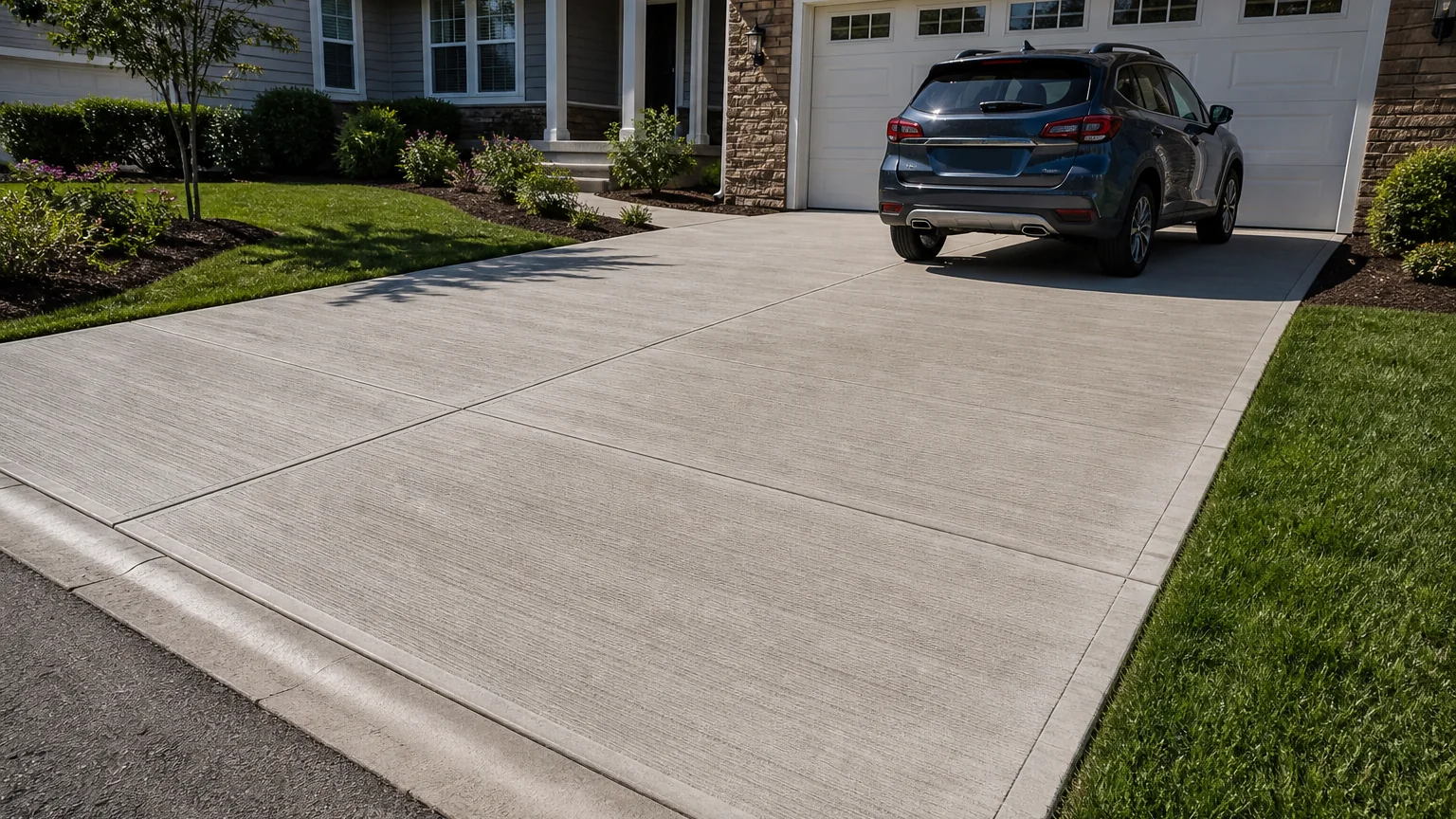
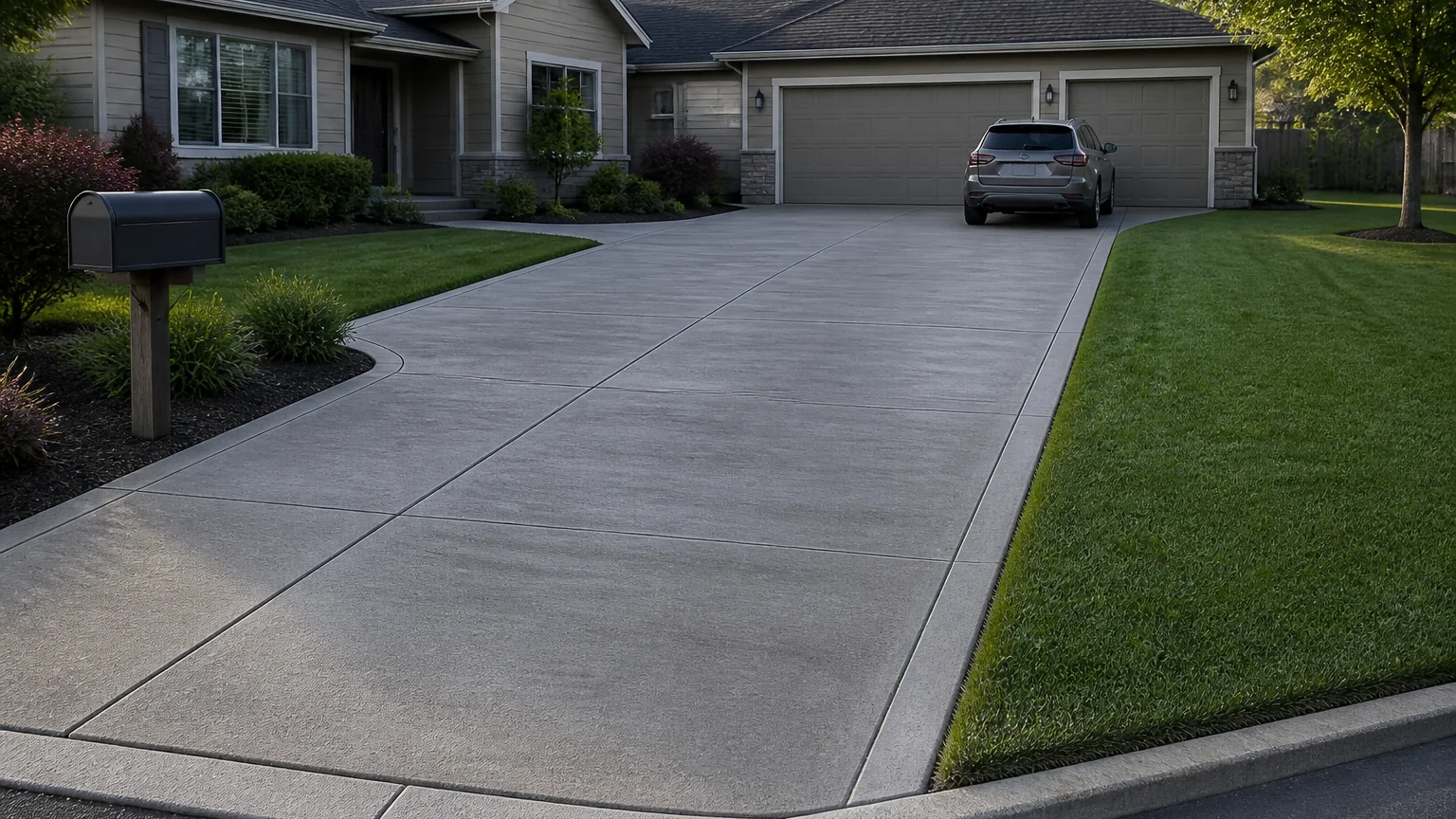
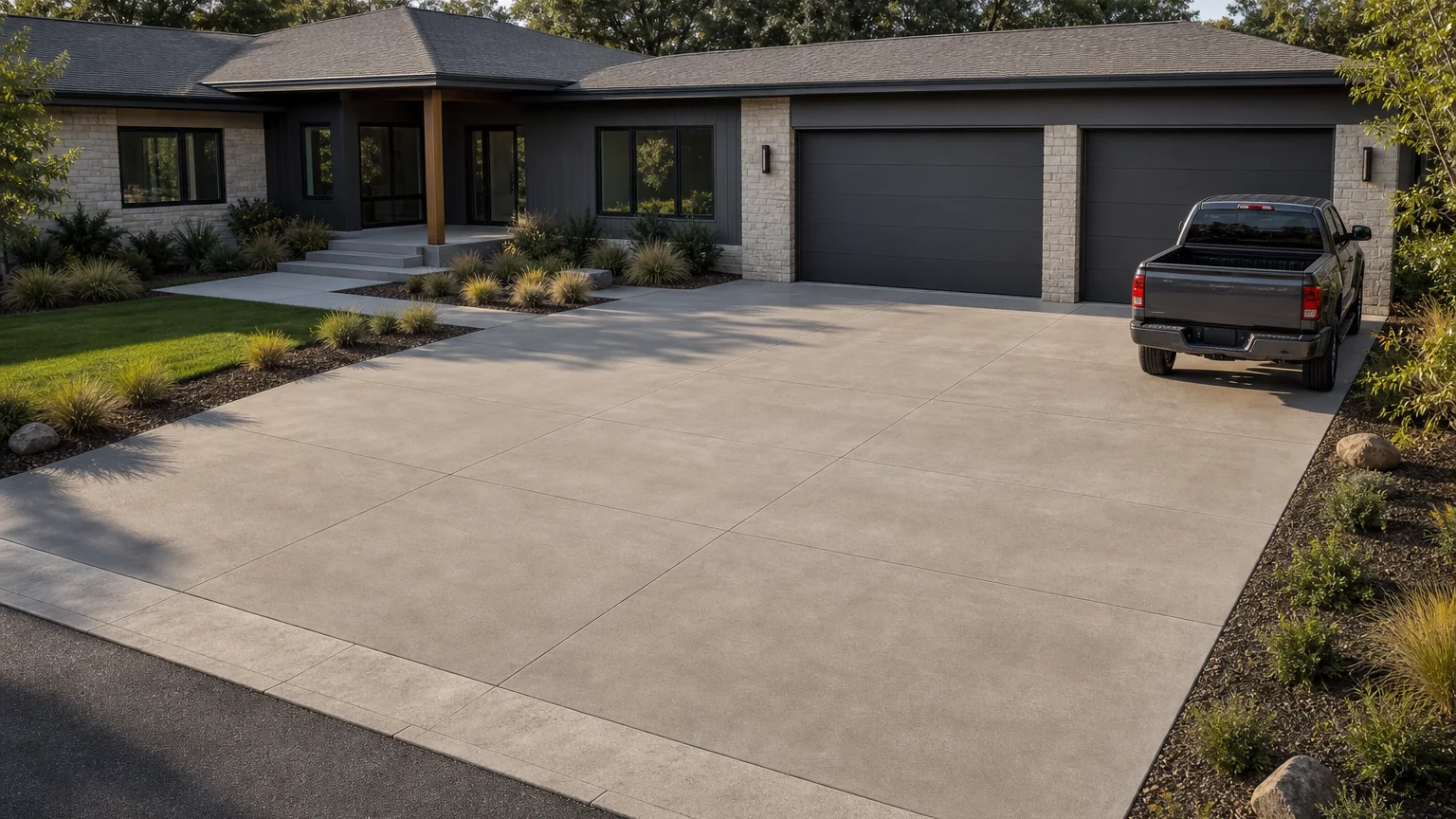
Sandblasting opens the surface just enough to create a consistent matte texture and traction without the loose look of coarse aggregate, which suits the horizontal calm of a ranch. The finish feels considered and holds up to weather and cleaning.
- The tradeoff
- Sandblasting creates a soft matte look, but the extra operation exposes the surface and demands uniform workmanship.
- How to measure it
- Conceptual range: one driveway rectangle, with the sandblasting figured as a surface treatment.
On your property
Plan it for your site
Keep the blast even across the field so the matte tone stays uniform, and seal it to protect the opened surface. Confirm the texture grips in the turning zones and drains cleanly, and keep the joint grid squared to the low, long facade.
- Keep the sandblast even so the matte surface does not patch light and dark.
- Seal the opened surface to protect it and ease cleaning.
- Confirm traction and drainage across the turning and braking zones.
Before forms are set
Build implications
- Confirm before estimating A sample panel showing an even matte blast, sealed.
- Confirm before estimating Traction and drainage across turning zones.
- Confirm before estimating A joint grid squared to the facade.
- Measure the site and establish elevations Record boundaries, thresholds, grade changes, utilities, and the dimensions of vehicles, furniture, equipment, or structures that affect the layout.
- Test how the space will be used Check walking routes, turning paths, door swings, working clearances, maintenance access, and the route back to the house or street.
- Resolve drainage, services, and structural support Decide where water goes and coordinate drains, conduit, irrigation, fuel, electrical work, footings, and independent supports before forms are set.
- Define and estimate each concrete element Confirm the slab or footing section, base, joints, edges, and finish, then estimate simple measurable fields separately from steps, walls, drains, and supported features.
Prevent these problems
- Overblasting the surfaceAggressive or uneven work can expose coarse stone, weaken the surface paste, or leave visible bands.
What changes the work and quote
- Post-cure blasting, masking, cleanup, and sample approvalKeep it simpler: Use a light broom texture with a matte compatible sealer.
Next step
Turn the idea into your estimate
Enter the dimensions and section for your property. The image does not provide a takeoff.
Estimate your drivewayQuestions this idea raises
How is sandblasted different from exposed aggregate?
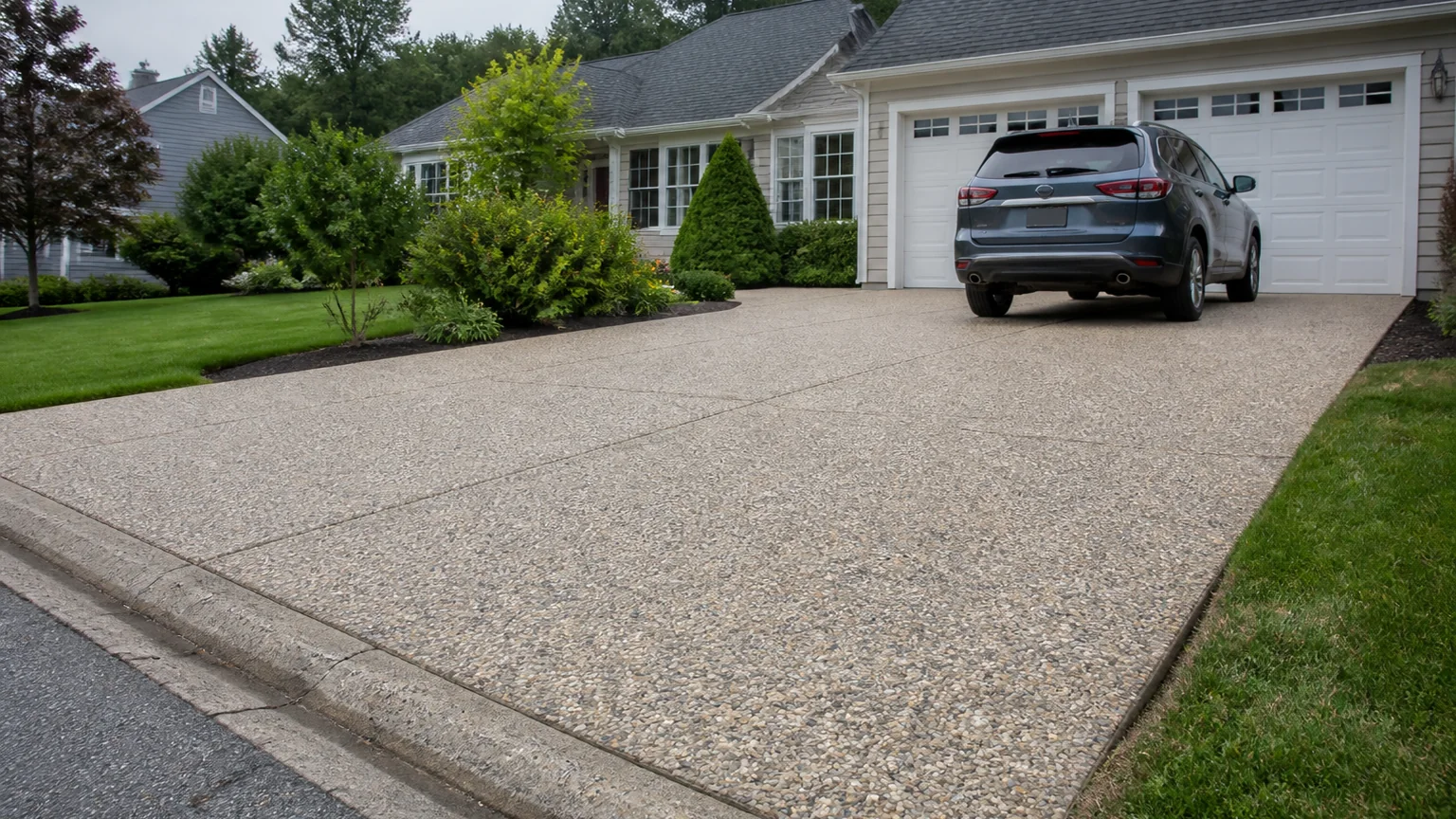
Sandblasting lightly abrades the surface for a fine, even matte texture, while exposed aggregate washes cement away to reveal whole stones. Sandblasting reads smoother and more uniform.
Does a sandblasted drive need sealing?
Opening the surface makes sealing worthwhile to protect it and keep it easy to clean, with a periodic reseal. Confirm the product suits vehicle traffic and your climate.
- Best when
- A matte, fine texture suits the architecture and a skilled finisher can produce a consistent surface.
- Reconsider when
- The site has heavy freeze-thaw exposure, steep grades, or no practical way to test wet traction.
- Verify first
- Approve a full finish sample and confirm the blasting method, protection, cleaning, and curing sequence.
- Professional input
- A concrete contractor should confirm the slab, base, joints, and drainage. Ask an engineer or the local authority to review retaining work, structures, unusual loads, or public-right-of-way changes.
Sources and further reading
- NRMCA CIP 6: Joints in Concrete Slabs on GradeJoint spacing, panel shape, isolation, and saw-cut depth for slabs on grade.
- FHWA: Bases and Subbases for Concrete PavementsProfessional guidance on uniform support, subgrade risks, drainage, and stable base layers.
- NRMCA CIP 11: Curing In-Place ConcretePlain-language guidance on curing methods, timing, weather, and surface protection.