Design decision
Why this idea works
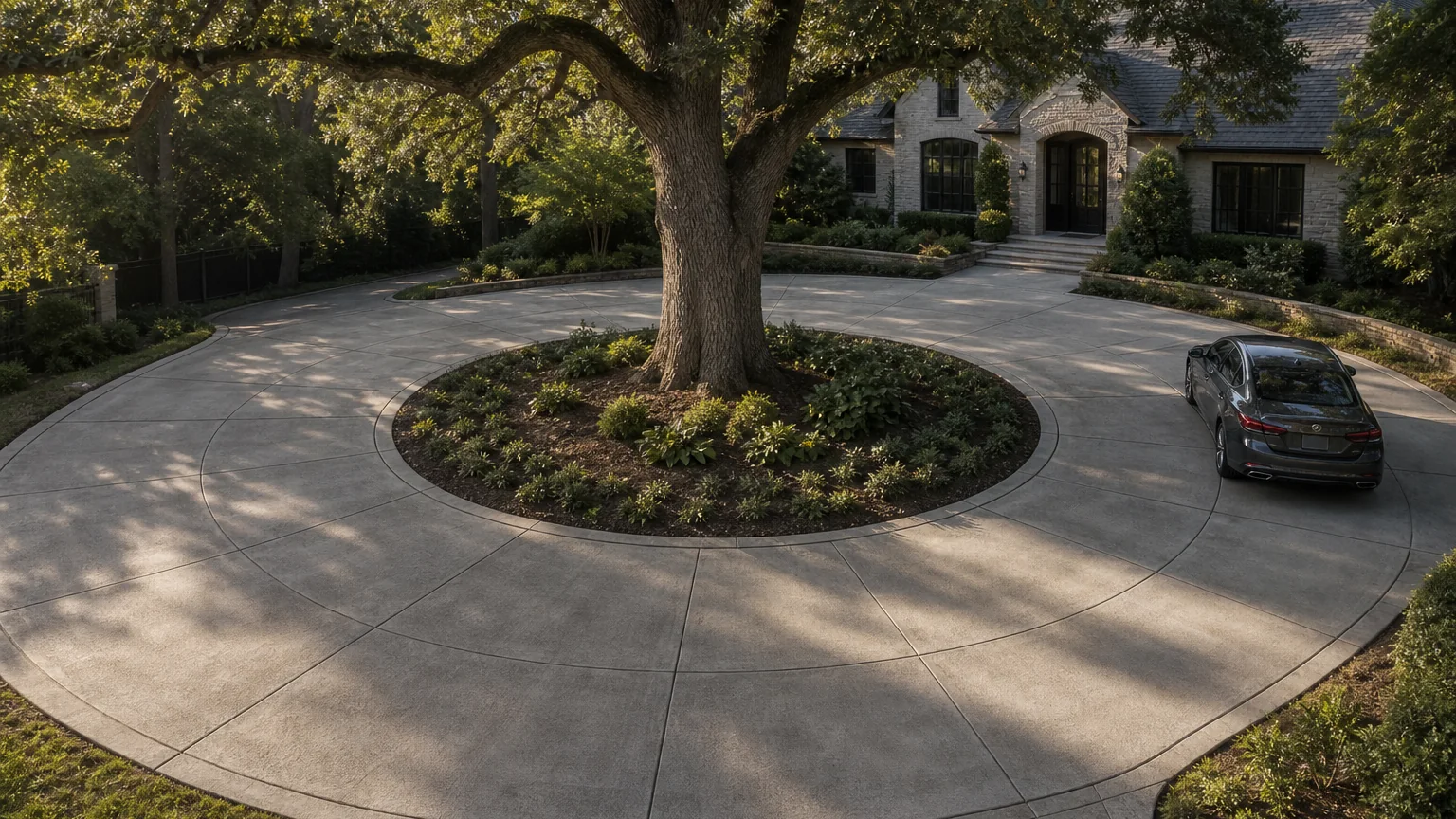
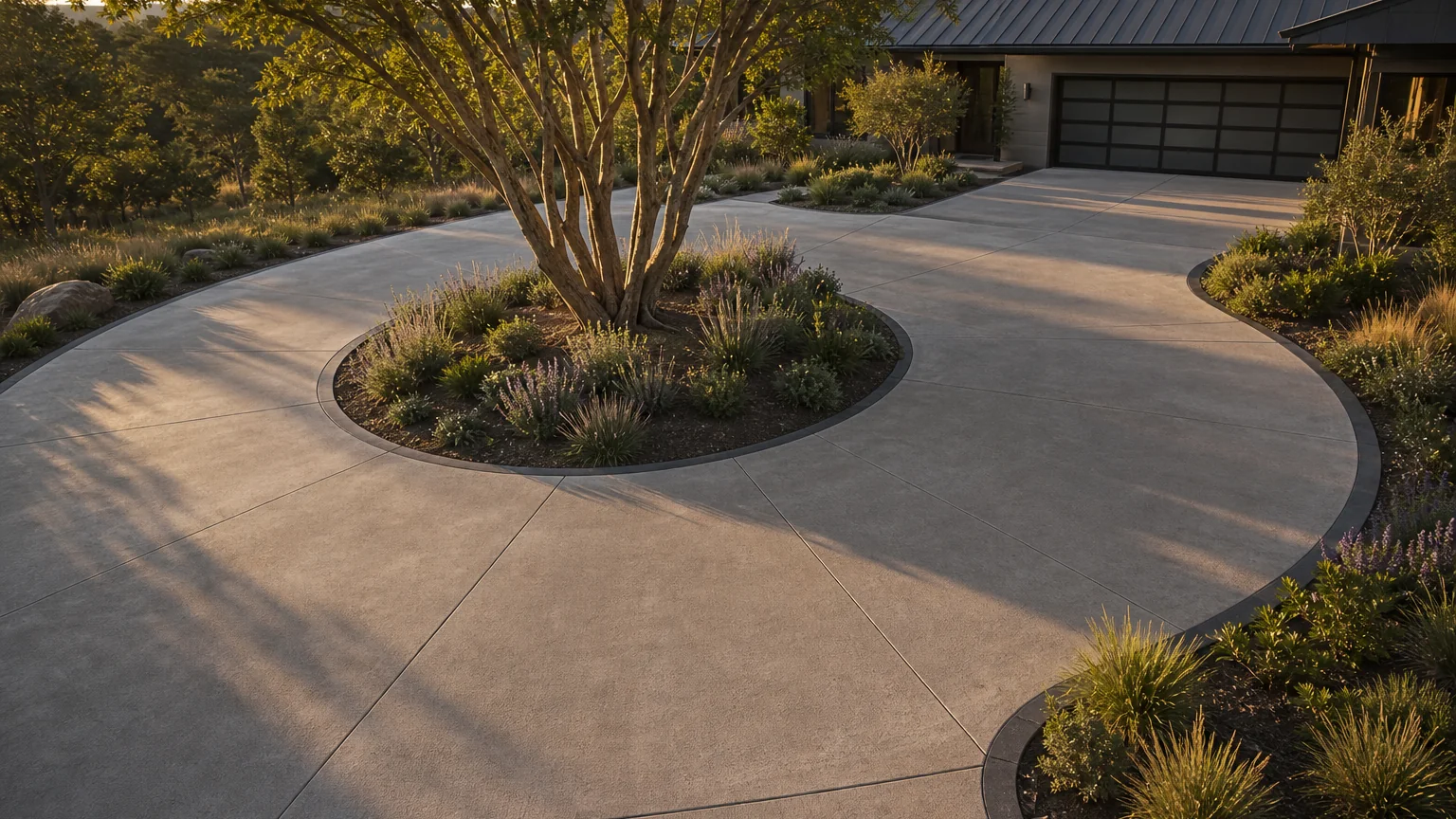
A single striking tree can anchor the whole approach, and curving the broad panels around it turns the drive into a setting for the tree rather than a strip beside it. The geometry feels deliberate and the tree gives the arrival scale and character.
- The tradeoff
- The tree gives the arrival a strong focus, but its growing root and canopy needs limit pavement and grading.
- How to measure it
- Conceptual range: the driveway measured around the tree, with the tree pit and root zone figured separately.
On your property
Plan it for your site
Keep the panels calm and the finish quiet so the tree is the feature, and lay the curve out full-size so the paving flows around it. Give the tree a protected root zone and steer the base clear of its roots so the drive does not harm it.
- Protect the tree root zone and keep the paving and base clear of major roots.
- Lay the broad panels out full-size so they flow cleanly around the tree.
- Detail the tree pit edge so tires and plows stay off the soil.
Before forms are set
Build implications
- Confirm before estimating A protected root zone for the entry tree.
- Confirm before estimating Broad panels laid out to flow around the tree.
- Confirm before estimating A protective pit edge around the tree.
- Measure the site and establish elevations Record boundaries, thresholds, grade changes, utilities, and the dimensions of vehicles, furniture, equipment, or structures that affect the layout.
- Test how the space will be used Check walking routes, turning paths, door swings, working clearances, maintenance access, and the route back to the house or street.
- Resolve drainage, services, and structural support Decide where water goes and coordinate drains, conduit, irrigation, fuel, electrical work, footings, and independent supports before forms are set.
- Define and estimate each concrete element Confirm the slab or footing section, base, joints, edges, and finish, then estimate simple measurable fields separately from steps, walls, drains, and supported features.
Prevent these problems
- A tree island sized to the trunkRoots and canopy extend far beyond the trunk, so a small opening can harm the tree and lift nearby paving.
What changes the work and quote
- Root protection, curved layout, irrigation or soil work, and drainageKeep it simpler: Place the focal tree beside a straight drive instead of inside a curve.
Next step
Turn the idea into your estimate
Enter the dimensions and section for your property. The image does not provide a takeoff.
Estimate your drivewayQuestions this idea raises
Will paving around a tree hurt it?
It can if the base and compaction reach the root zone, so keep the paving clear of major roots and give the tree a real protected pit. An arborist can set the setback.
How do I keep the panels flowing around the tree?
Lay the curve out full-size so the broad panels sweep cleanly past the pit, and set the joints to follow. Plan the geometry before forming.
- Best when
- A specimen tree can sit outside its protected root zone and the curve gives vehicles a clear, tested path.
- Reconsider when
- The slab would cover roots, compact soil, or direct runoff and deicing residue into the planting area.
- Verify first
- Have an arborist set the root-protection boundary and test the vehicle sweep around it.
- Professional input
- A concrete contractor should confirm the slab, base, joints, and drainage. Ask an engineer or the local authority to review retaining work, structures, unusual loads, or public-right-of-way changes.
Sources and further reading
- NRMCA CIP 6: Joints in Concrete Slabs on GradeJoint spacing, panel shape, isolation, and saw-cut depth for slabs on grade.
- FHWA: Bases and Subbases for Concrete PavementsProfessional guidance on uniform support, subgrade risks, drainage, and stable base layers.
- U.S. EPA: Types of Green InfrastructureHow rain gardens, swales, and permeable pavement store, slow, or infiltrate runoff.